For NZ Dairy Farmers · Pasture-led, profit-first

The five Fs are squeezing margin. Get pasture working harder.

Fuel, fertiliser, feed, freight, finance — input costs are up 27% since 2020 and the operating margin is the first place it shows. GroundShift is an independent advisory team and AI platform built around the strength of NZ's pasture-based system. One whole-farm view across soils, pasture, herd, and financials. One credible plan. Cashflow protected at every step.

Independent · Whole-farm · Pasture-led
Dairy Farm • 430 cows • 192ha effective

Whole-farm soil assessment showed we were over-applying N on 40% of our paddocks — same prescription every season for fifteen years. One season, $31k off the fert bill, kgMS held within 2%. The Co-operative Difference paperwork wrote itself.

Sam Wallace
Dairy Farm • Waikato
  • Co-operative Difference ready. Lead With Pride aligned Soils
  • Pasture + Herd + Financials — one whole-farm view
  • We don't sell fert, feed, or schemes
  • Bank-credible before/after on kgMS & cost of production
  • Independent. Human-first. NZ-built

How it works

Advisory + tech, at every step.

Assess

Farm walk with you and the team. We look at covers, soils, herd condition, the dairy shed, and the books. We pull in your MINDA records, Insights Report, and last season's accounts to set a real baseline.

Plan

One whole-farm plan that protects cost of production. Pasture rotation, feed budget, fert plan, mating decisions, debt position — sequenced for the season ahead with clear decision gates.

Execute

Two-paddock trials, not whole-farm gambles. The platform tracks covers, leaf emergence, supplement use, and kgMS — flagging when something's off rotation before the wedge tells you the hard way.

Prove

Before/after on cost of production, kgMS, and emissions intensity. One report your bank manager actually reads, your processor accepts for the Co-operative Difference, and your team can stand behind.

The Reality

It's getting tougher out there.
$
42
bn

Five Fs cost rise since 2020

Fuel, fertiliser, feed, freight, finance. Margin pressure shows up in supplementary feed first — the largest line on most NZ dairy P&Ls.

1
in 4

NZ farms under debt pressure

Servicing costs climbing while the bank wants a credible plan and proof of cost-of-production discipline.

414
kgMS

Average milksolids per cow

A new high — but built off a 0.5% national herd reduction. Productivity per cow is doing the heavy lifting. Pasture is where it's earned.

Are you milking the most of your opportunities?

Whole-farm coverage

Every part of the dairy system

Pasture

Make pasture work harder.

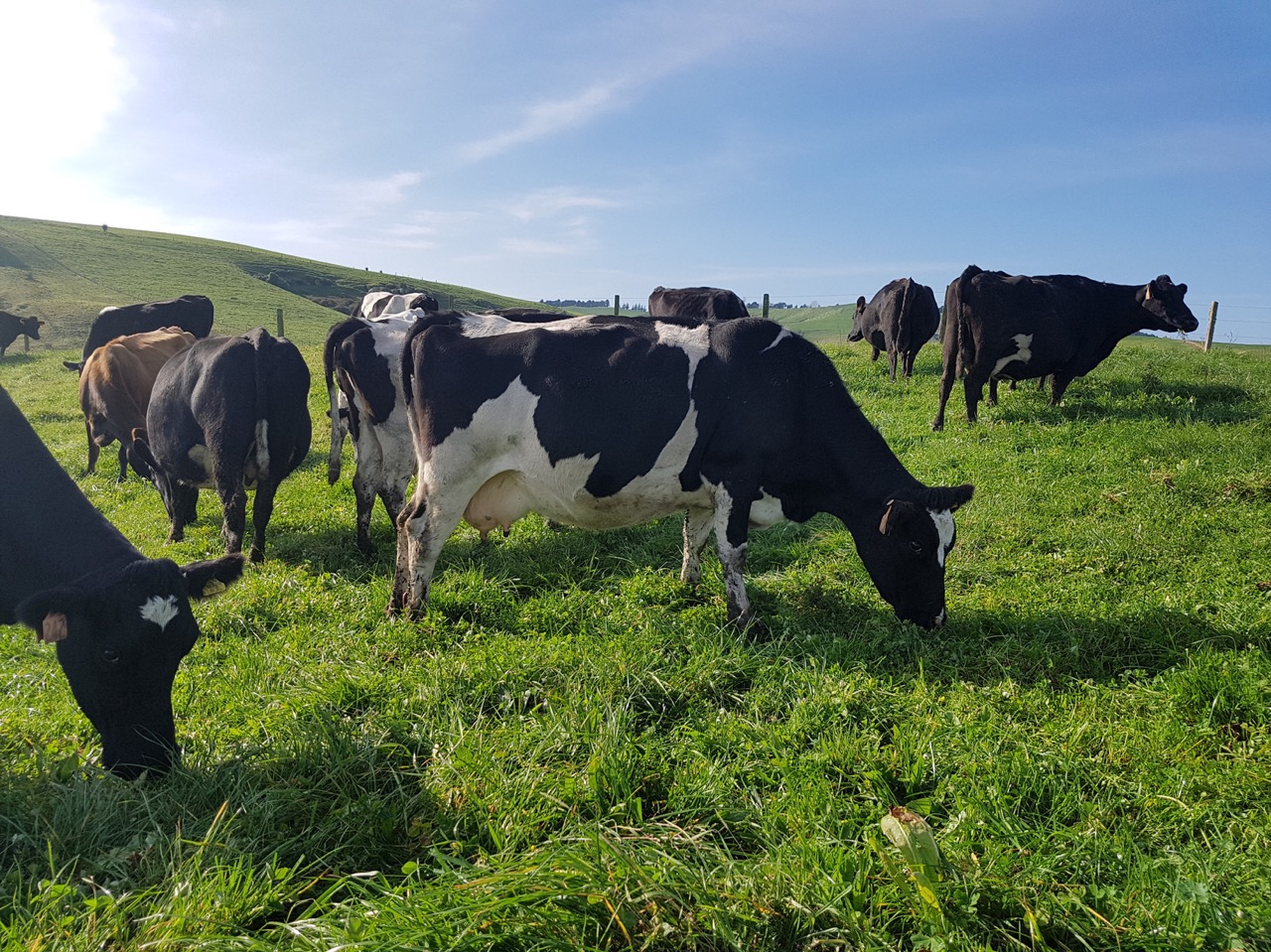
Pasture is still the cheapest feed on the planet, and it's the foundation of NZ's dairy advantage. Covers, leaf emergence, rotation lengths, supplement strategy — measured weekly, planned forward, not reactively.

  • Pasture wedge + cover monitoring, automated
  • Feed budget that flexes with the season
  • Resilient species mix trials on selected paddocks

Soils & Nutrients

Stop over-applying nitrogen.

Most dairy farms are still applying N on a calendar, not a soil test. Whole-farm baseline shows you where the value is — and where the waste is. The single biggest input lever on most farms.

  • Whole-farm soil baseline + paddock-level N strategy
  • Targeted fertiliser plan, not blanket applications
  • OverseerFM & freshwater compliance built in

Herd & kgMS

kgMS per cow, per hectare, per dollar.

Stocking rate, body condition, mating decisions, dairy-beef integration — managed as one system. Herd performance read alongside feed supply and cost, not in isolation.

  • Stocking rate sensitivity to feed cost & payout
  • Mating & lactation plan integrated with feed wedge
  • MINDA + Insights Report data, all in one view

Cost of Production

The numbers your bank wants to see.

Cost of production per kgMS, FWE per cow, sensitivity to payout swings. Bank-credible reporting that sets up the seasonal review, the next loan, the succession conversation.

  • Cost-of-production benchmarking by region
  • Co-operative Difference / Lead With Pride reporting
  • Bank-ready before/after, plus 3–5 year roadmap

Word of mouth

From the cowshed, not the boardroom.
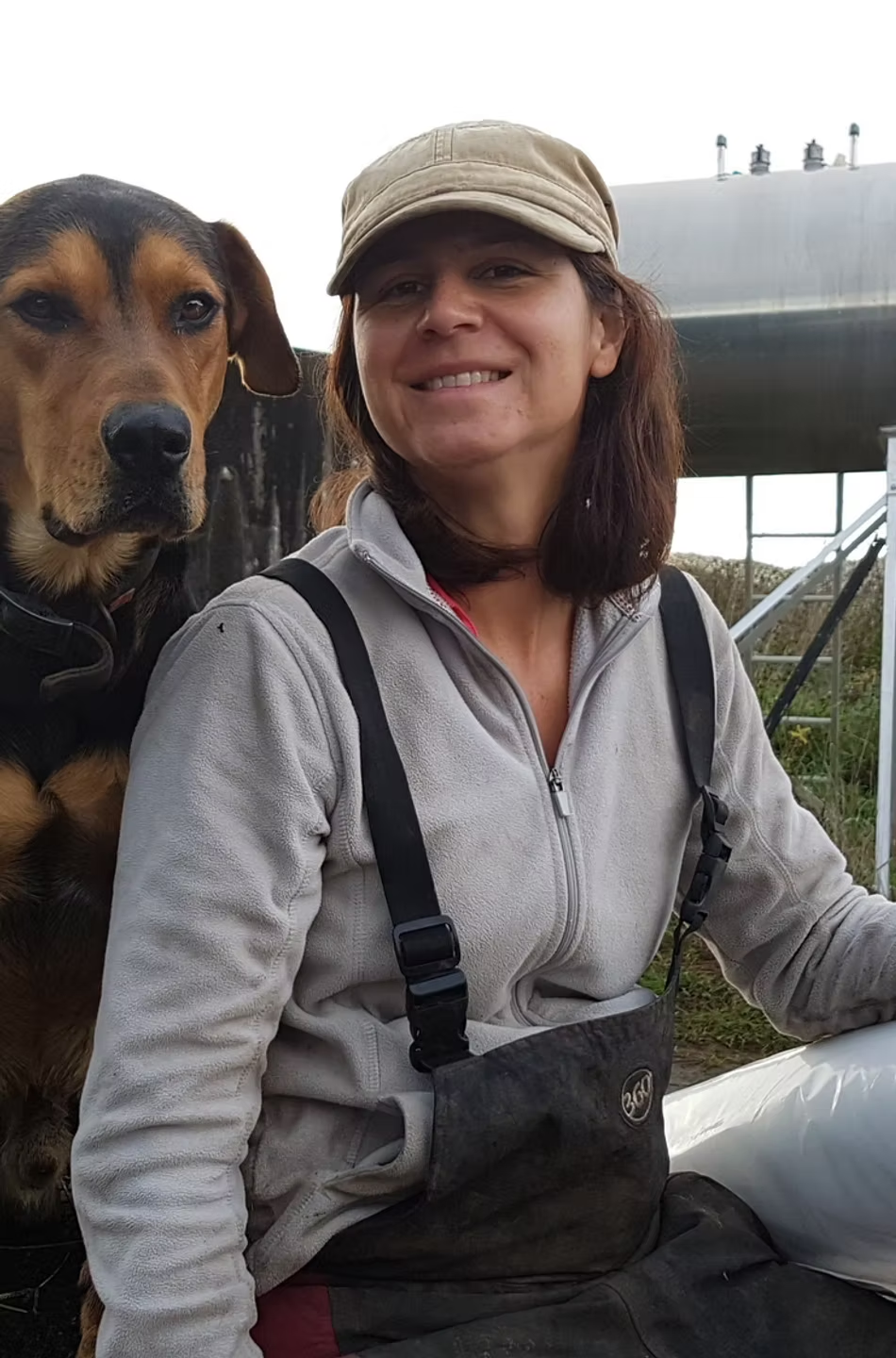
Whole-farm soil assessment showed we were over-applying N on 40% of our paddocks — same prescription every season for fifteen years. One season, $31k off the fert bill, kgMS held within 2%. The Co-operative Difference paperwork wrote itself.

Dairy Farm • Waikato
430 cows • 192ha effective • Fonterra
$31k
Saved on N yr 1
kgMS
held within 2%

What sets us apart

Groundshift vs the usual approach

Typical Providers

  • Fert / feed reps, scheme partners
  • One product line at a time
  • Whole-farm switch on faith
  • Replaced or talking past each other
  • You stitch it together each season
  • Anecdotes and last year's accounts

Groundshift

  • Independent, no products to sell
  • Pasture · Soils · Herd · Financials
  • Two-paddock trials with decision gates
  • Vet, nutritionist, consultant — coordinated
  • Co-op Difference & LWP-ready
  • Cost-of-production proof, defensible plan
Straight Answers

Things farmers actually ask.

If your question isn't here, ring us. Real person, real number: 0800 GROUND (476 863).

Yes. The data we collect (emissions intensity, water, animal welfare, biodiversity actions) maps directly onto Fonterra's Te Pūtake / Te Puku / Te Tihi tiers, plus the Mars and Nestlé-funded Emissions Excellence payment. Synlait Lead With Pride and Open Country premium tiers use a similar framework. We package it for whichever processor you supply.

The 2050 biogenic methane target was revised to 14–24% below 2017, and farm-level methane pricing is off the table. That doesn't make emissions data unimportant — your processor and your bank both want it now. We give you the inventory and the improvement story without the lecture.

No. We're outcome-led, not ideology-led. NZ's pasture-based system is already one of the most efficient in the world — we're not trying to change the model, we're trying to get more out of it. If a regen practice makes sense on your farm, great. If conventional N timing works better, that's what we'll recommend. The only test is what holds margin.

Designed to work alongside them, not replace them. Most dairy farms already have a vet, a nutritionist, a farm consultant, a fert rep, and a banker. GroundShift brings the whole-farm view and coordinates one plan everyone can back. Existing relationships usually get stronger because the conversations stop talking past each other.

Now is usually fine. We sequence the work around your season — assessment in the shoulder months, trial paddocks chosen so they don't disrupt mating or peak production. Most farmers start with a farm walk, get the baseline back in 3–4 weeks, and have decisions to act on before the next planning window.

We use OverseerFM where it's required and supplement it with paddock-level soil data. The plan is built to your regional council's freshwater rules and the upcoming RMA changes — not against them. You get one set of numbers that works for your council, your processor, and your bank.

The whole approach is built to protect production while we shift inputs. Two-paddock trials prove a change before it touches the rest of the farm. If kgMS slips outside agreed tolerance at a decision gate, we adjust — before it shows up in the milk cheque.

Ready when you are

Start with a farm walk and a cup of tea.

One visit. Whole decision team. We walk the paddocks with you between rounds, sit down with the books, and within a few weeks deliver a whole-farm baseline — covers, soils, kgMS, cost of production. No commitment beyond the first conversation.

  • Independent advice
    We don't sell fert, feed, or schemes — full stop.
  • Whole-farm view
    Pasture, soils, herd, and financials — one connected plan.
  • Bank-credible
    Cost-of-production proof and a defensible 3-year roadmap.
Contact Details
Contact Details
Contact Details

By submitting this form you agree to us contacting you and using your details for marketing purposes as per our privacy policy.

Thank you! Your submission has been received!
Oops! Something went wrong while submitting the form.